Online Islamic classes for children

Online Islamic School for Children in the UK

Give your child a strong foundation in Islamic education from the comfort of home. Our online Islamic school for children in the UK offers engaging Quran reading, Noorani Qaida, Tajweed and Islamic studies lessons with caring teachers in a safe, child-friendly learning environment.

Islamic Education for Kids

Online Islamic School for Children in the UK

Every parent wants their child to grow with good knowledge, strong values and a clear understanding of their faith. An online Islamic school for children gives families a way to explore Islamic education from home while managing school, family life and other daily activities.

Online Islamic Academy for Kids supports families looking for online Islamic learning for their children. Parents can explore learning options related to the Holy Quran, Islamic Studies and the foundations of Muslim life. Our aim is to make Islamic education accessible to families who want their children to learn from home.

Whether you are looking for Quran reading lessons, Islamic knowledge or guidance on the basic teachings of Islam, it is important to choose learning options that match your child's age and current level. You can contact our academy to discuss your child's needs and confirm which classes are available.

```html

What Is an Online Islamic School for Children?

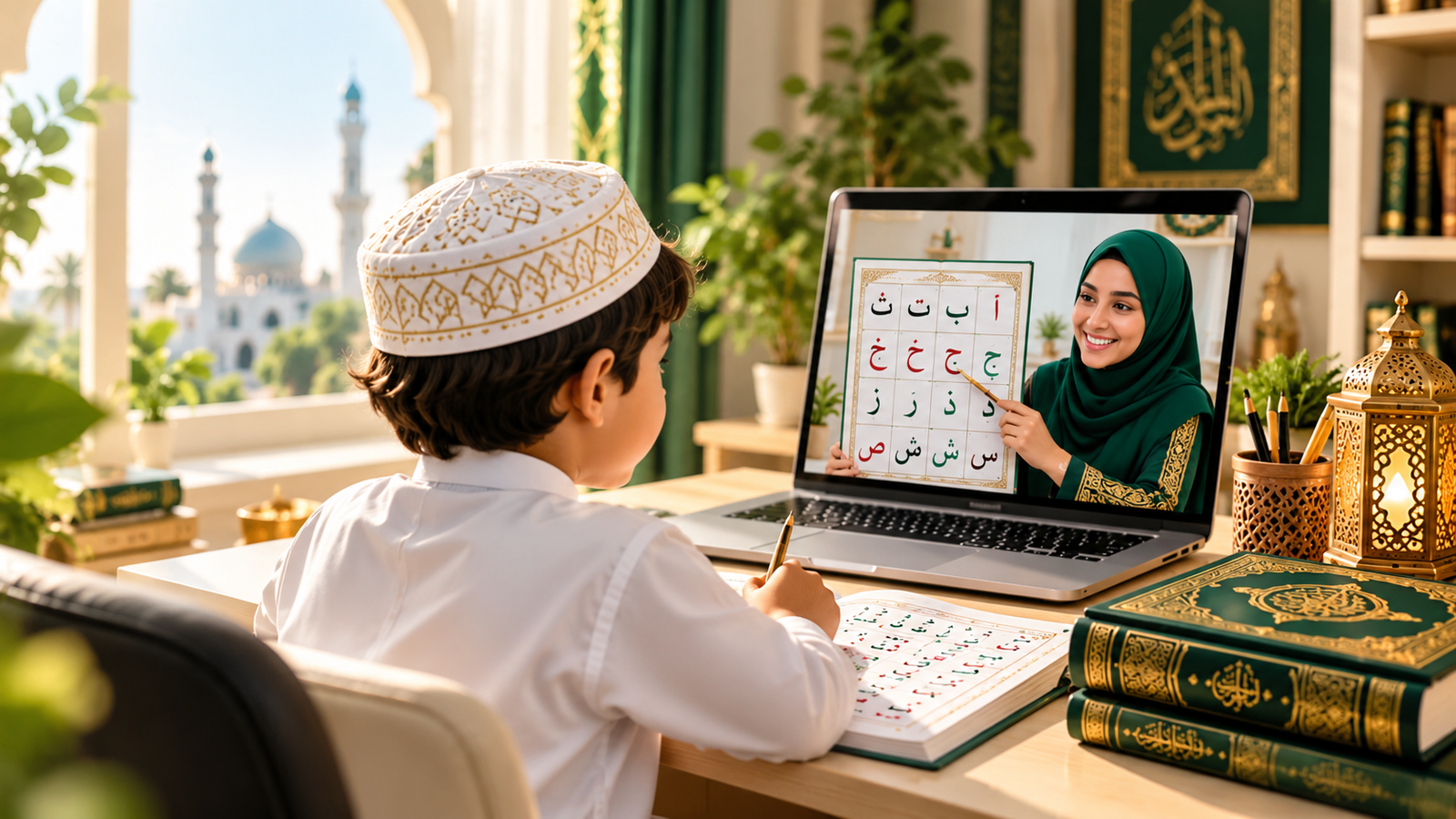
An online Islamic school provides Islamic learning through lessons delivered over the internet. Instead of travelling to a physical madrasa, children can access lessons from home using a suitable device and internet connection.

Depending on the courses offered, an online Islamic school may teach Quran reading, Quran recitation, Islamic Studies, Arabic and everyday Islamic practices. These subjects can help Muslim children build a foundation in their faith and understand the teachings they encounter in family and community life.

A virtual madrasa for kids can be helpful for families who need flexible learning arrangements. Parents can discuss suitable lesson times, the child's current knowledge and the subjects they want their child to study before enrolling.

Online learning also requires a suitable environment. Children need a quiet space, an internet connection and support from parents when necessary. Choosing an approach that suits the child's age and attention span can help make lessons more comfortable.

```
Our Learning Subjects

What Can Children Learn at Our Online Islamic Academy?

Islamic education covers more than one subject. Children can develop their understanding of the Quran, learn about Islamic beliefs and discover how Muslim values guide daily life. The subjects available to each child should be confirmed with the academy before enrolment.

01

Quran Reading and Recitation

Learning to read the Holy Quran is an important part of Islamic education for many Muslim families. Children may begin by learning Arabic letters, recognising words and practising Quran reading. As their skills develop, they can work towards clearer and more confident recitation.

Tajweed refers to the rules that guide the correct pronunciation and recitation of the Quran. Parents who want their children to learn Quran with Tajweed should confirm whether Tajweed lessons are included in the selected course.

Regular practice can help children become more familiar with Quranic words and surahs. Parents can also ask about the teaching approach, how lessons match a child's reading level and what practice is recommended between classes.

Explore Quran Learning Options
02

Islamic Studies and Muslim Values

Islamic Studies helps children learn about their faith in an age-appropriate way. Depending on the syllabus, lessons may cover basic Islamic beliefs, worship, good manners, the life of Prophet Muhammad (peace be upon him) and important events in Islamic history.

Children can also learn about akhlaq, which refers to good character and behaviour. Topics may include honesty, kindness, respect for parents, helping others and treating people fairly. These ideas help children connect Islamic knowledge with everyday situations.

Parents should ask which topics are included in the academy's Islamic Studies lessons. A clear syllabus makes it easier to understand what children will learn and whether the course matches the family's educational goals.

03

Arabic Letters and Basic Arabic

Arabic is the language of the Quran, and learning its letters can support a child's Quran reading journey. Beginners may need time to recognise letters, understand their sounds and practise joining them to read simple words.

Some children may already know the Arabic alphabet, while others may need to begin with the basics. A suitable learning plan should take account of this difference rather than expect every child to start at the same level.

If Arabic language lessons are important to your family, ask the academy whether Arabic letters, basic Arabic or a structured Arabic course is available as part of its current teaching options.

ONLINE LEARNING GUIDE

How Does a Virtual Madrasa for Kids Work?

Understand how online Islamic classes work and what families should consider before enrolling their children.

1. Prepare for Online Lessons

A virtual madrasa allows children to attend lessons online from a suitable place at home. Families usually need a computer, tablet or another supported device, a stable internet connection and a quiet learning space.

2. Discuss Your Child's Learning Needs

Before lessons begin, parents should explain their child's age, previous learning and the subjects they want to cover. This helps the academy discuss the available course options and whether they suit the child's needs.

3. Participate and Practise

Online lessons require children to listen, participate and practise what they learn. Parents can help younger children prepare their device, join lessons on time and stay focused during class.

4. Check the Course Details

The exact arrangements can differ between courses. Before enrolling, ask about lesson duration, weekly frequency, class size, teacher availability, course fees and how learning progress is reviewed. These details help you make an informed choice for your family.

LEARNING THAT FITS FAMILY LIFE

Benefits of Online Islamic Learning for Children

Online Islamic education can help families make room for their children's religious learning while balancing school, home life and other responsibilities.

01

Learn from Home

Children can attend online lessons without travelling to a physical classroom. This may make it easier for families to fit Islamic learning around school and other responsibilities.

02

Greater Parental Involvement

Parents can help prepare a suitable study space, encourage regular practice and discuss questions that arise during their child's lessons.

03

Explore Different Subjects

Depending on course availability, families can enquire about Quran reading, Islamic Studies and other subjects that support their child's religious learning.

A NOTE FOR PARENTS

Choose a Learning Method That Suits Your Child

Online learning is not automatically the best option for every child. Some children need more help with concentration or technology, while others may prefer face-to-face teaching. Consider your child's needs and ask questions before choosing a course.

Explore the available learning options for your child.

Explore Online Classes
ISLAMIC LEARNING FOR CHILDREN

Who Can Join Our Online Islamic School?

Every child has different learning needs. Explore the available online Islamic learning options and consider your child's age, current skills and learning goals before choosing a class.

01
STARTING OUT

Children Who Are Beginners

Children who are new to Quran learning may need support with Arabic letters, basic pronunciation and the foundations of Quran reading.

02
BUILDING SKILLS

Children with Previous Experience

Children who already have some Quran learning experience may be ready to strengthen their reading skills and develop their existing knowledge.

03
ISLAMIC KNOWLEDGE

Children Exploring Islamic Studies

Families can enquire about Islamic Studies to help children develop a stronger understanding of Islamic teachings and other areas covered by the available courses.

04
BASIC ARABIC

Children Learning Arabic Letters

Children who need a foundation in Arabic letters can enquire about suitable beginner-level options to help them develop their basic Arabic knowledge.

FOR PARENTS

How Do You Choose the Right Starting Point?

The best starting point depends on your child's age, current skills and learning goals. Share this information when enquiring so you can understand which available classes may be appropriate for your child.

FOR FAMILIES ACROSS THE UK

Explore Online Islamic Learning from Home

Families across the UK can explore online lessons without needing to live near a physical academy. Confirm teaching times and scheduling arrangements with the academy before enrolling.

Explore Online Classes

Why Choose Online Islamic Academy for Kids?

Online Islamic Academy for Kids focuses on online education for children and families seeking accessible ways to learn about Islam and the Quran. We understand that parents want clear information about teachers, course content and lesson arrangements before making a decision.

Our teaching team includes male and female teachers. The academy's teachers have been described as experienced and UK-certified, with good spoken English, and include teachers with MPhil qualifications in Islamic Studies. Parents should enquire about the individual teacher's qualifications, availability and suitability for their child's course.

We encourage parents to discuss their child's age, previous learning and educational goals before selecting classes. This helps families understand the available options and decide whether the teaching arrangements meet their needs.

We also recognise that children learn at different speeds. Regular practice, clear explanations and support from parents can help children build confidence in their learning. We encourage families to ask questions and understand the course expectations before enrolling.

Male & Female Teachers Quran & Islamic Studies
UK-Friendly Timings Morning & Evening Classes
One-to-One Classes One Student, One Teacher
Personalised Learning Focused on Each Child

How Parents Can Support Islamic Learning at Home

Simple ways to help children develop positive learning habits, practise regularly and enjoy their Islamic education at home.

Create a Regular Learning Routine

Parents can help children build positive learning habits by creating a regular time for lessons and practice. A quiet study area, a suitable device and fewer distractions can help children concentrate during online classes.

Talk About What They Learn

Ask your child to explain a new Islamic concept, practise a familiar Quran passage or share something interesting from their lesson. Keep these conversations encouraging and appropriate for their age.

Encourage Progress at Their Own Pace

Children need time to understand new ideas and develop reading skills. Encourage effort, curiosity and good habits rather than expecting immediate progress.

Stay in Touch with the Teacher

If your child finds a lesson difficult, speak with the teacher and ask what additional practice may help. Working together can make Islamic learning more consistent and enjoyable.

A supportive approach makes a difference. Consistent practice, encouraging conversations and communication with the teacher can help children feel supported as they learn.

Enquire About Online Islamic Classes for Your Child

Are you looking for an online Islamic school for your child in the UK? Online Islamic Academy for Kids welcomes enquiries from parents who want to explore suitable Islamic learning options for their family.

When you contact us, share your child's age, current Quran reading level, preferred subjects and suitable lesson times. You can ask about the available syllabus, teacher arrangements, course fees and whether a trial lesson is offered.

To learn more about the academy and its wider learning options, visit the Online Islamic Academy for Kids. We encourage parents to gather the information they need before choosing a course for their child.

A thoughtful start can help your family find an approach to Islamic education that fits your child's learning needs and your household routine.

Helpful Information

Frequently Asked Questions

Explore answers to common questions about online Islamic schools for children, available subjects, beginner classes and choosing a suitable course for your family.

1. What is an online Islamic school for children?

An online Islamic school teaches children about Islam through lessons delivered over the internet. Depending on the courses available, children may study Quran reading, Islamic Studies, Arabic and Islamic values from home.

2. What is the difference between an online Islamic school and a virtual madrasa?

Both can provide Islamic education online. The name does not always indicate a different curriculum, so parents should check the subjects, syllabus, teaching arrangements and learning goals of each programme.

3. What subjects can children study at an online Islamic school?

Children may study Quran reading, recitation, Tajweed, Islamic beliefs, Islamic manners and Arabic. The subjects offered depend on the academy's available courses, so parents should confirm the current syllabus before enrolling.

4. Can beginners join an online Islamic school?

Beginners may be able to start with basic Quran reading or introductory Islamic Studies. Parents should explain their child's current knowledge and ask which classes are suitable for their age and learning level.

5. Do children need special equipment for online Islamic classes?

Children generally need a suitable computer, tablet or supported device, a reliable internet connection and a quiet place to learn. Parents should confirm the academy's specific technical requirements before the first lesson.

6. How can I choose the right online Islamic course for my child?

Consider your child's age, current knowledge, learning goals and preferred lesson times. Ask about the syllabus, teacher qualifications, fees, class format and progress reviews before deciding which course is right for your family.

Still Have Questions?

Contact us to ask about available courses, lesson arrangements and the information you need to choose a suitable Islamic learning option for your child.

Contact Us →