01
Complete Beginners
Children who have not yet learned the Arabic alphabet can start with the basics, including recognising Arabic letters and learning their sounds.
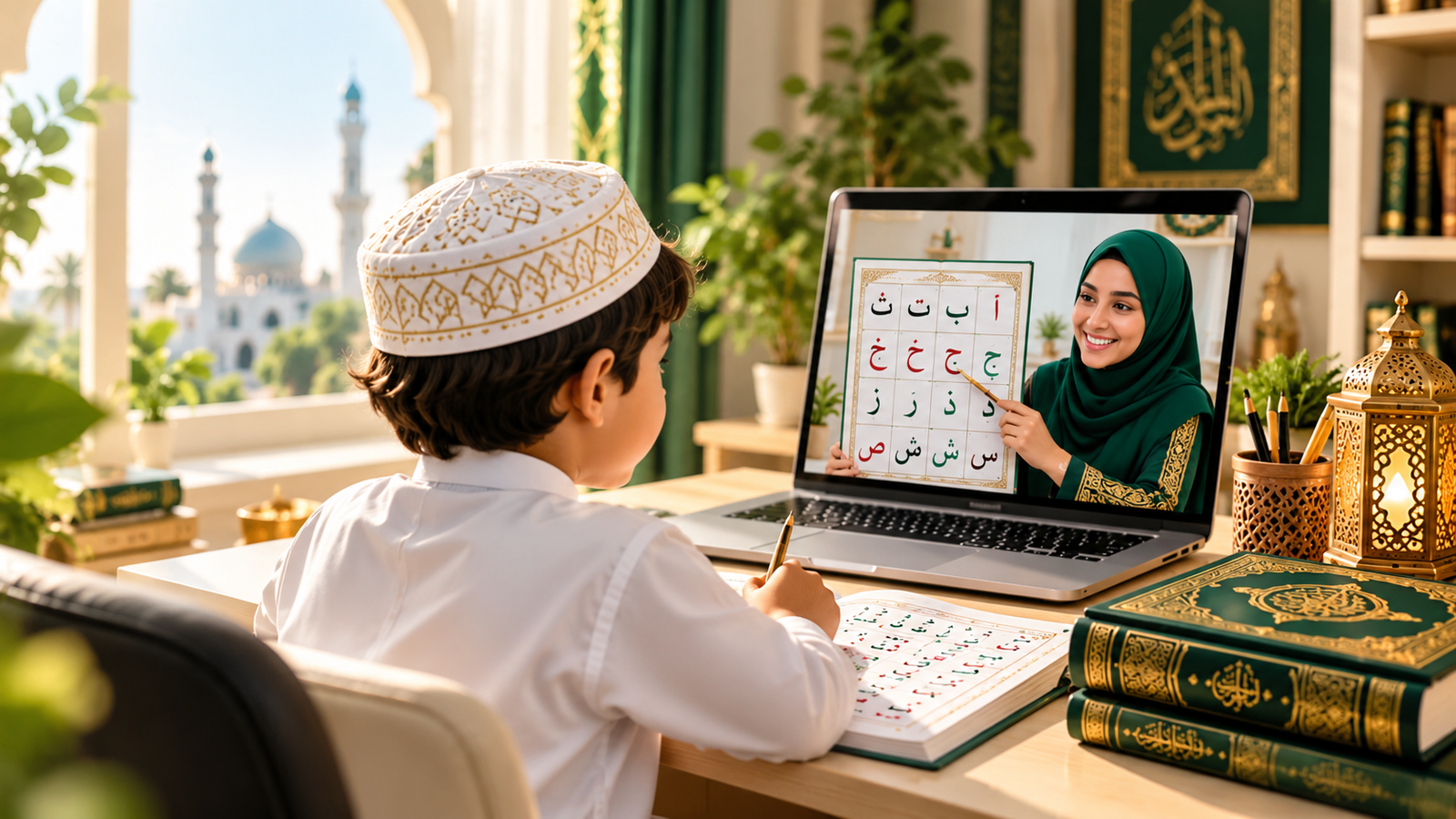
Help your child learn to read the Holy Quran through our online Quran reading classes for kids UK. From recognising Arabic letters and joining words to improving pronunciation, children can develop their Quran reading skills step by step from the comfort of home.star your trial class today.
Learning to read the Holy Quran is an important step in a child's Islamic education. Online Quran reading classes for kids help children begin with Arabic letters, learn how letters join to form words and gradually develop the skills needed to read Quranic verses. Online lessons allow children to learn from home while families in the UK explore a learning arrangement that suits their child's needs.
At Online Islamic Academy for Kids, families can enquire about online Quran learning and support for children at different reading levels. Whether your child is a complete beginner or already recognises some Arabic letters, we can discuss their current level, learning goals and suitable lesson options.
If you are looking for Quran reading classes online for kids, contact our academy to learn more about the course and available teaching arrangements.
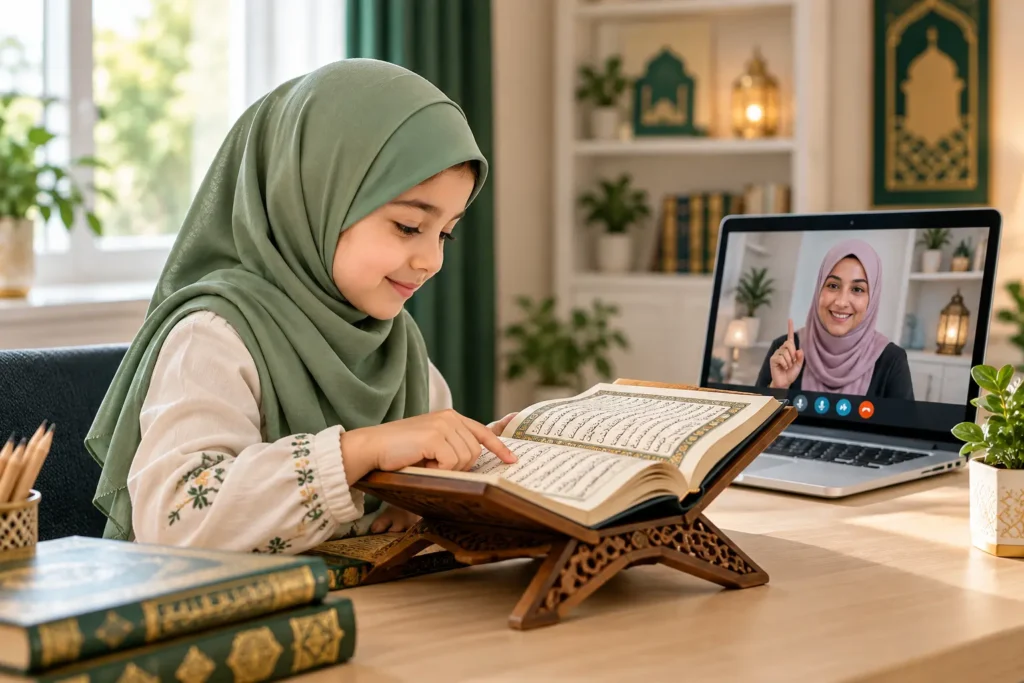
Online Quran reading classes are lessons that help children develop the skills needed to read the Holy Quran. Children may begin by learning Arabic letters and their sounds before moving on to joined letters, words and Quranic passages.
The learning process depends on the child's age, starting level and ability to practise. A beginner may need time to recognise letters, while a child who can already read may need help with fluency, pronunciation or basic Tajweed.
The aim is to help children build a sound foundation for reading the Quran, one step at a time.
A Quran reading course can cover several connected skills. The exact learning plan should match the child's current ability and the course offered by the academy.
Children begin by becoming familiar with the Arabic alphabet, letter shapes and sounds. They learn that some letters look different when they appear at the beginning, middle or end of a word.
Regular revision helps children remember the letters and recognise them more easily when reading.
After learning individual letters, children can practise joining them together. They learn how letter shapes change in connected writing and how to read short combinations.
This stage helps beginners move from recognising separate letters to reading simple Arabic words.
Harakat are marks that guide how Arabic letters are pronounced. Children can learn common marks such as Fathah, Kasrah and Dammah as part of their reading foundation.
As they develop, they may practise Sukoon, Shaddah and other reading signs according to their level and learning materials.
Once children have developed the necessary foundation, they can begin reading words and passages from the Holy Quran. They practise recognising familiar patterns, following the text correctly and reading carefully.
The amount of reading introduced should suit the child's ability. A steady pace helps children work through unfamiliar words without rushing.
Tajweed refers to the rules that guide correct Quran recitation. Children can begin developing good pronunciation habits while learning to read.
As their reading improves, they may work on Arabic letter sounds, clear pronunciation and relevant Tajweed rules. The level of Tajweed covered depends on the course and the child's progress.
Online Quran reading lessons may suit children with different levels of experience. The right starting point of Quran reading classes online depends on what your child already knows and which reading skills they need to develop.
Children who have not yet learned the Arabic alphabet can start with the basics, including recognising Arabic letters and learning their sounds.
Children who recognise letters but find it difficult to join them into words can practise connected letters and basic Arabic reading.
Children who can read simple words may work towards smoother Quran reading, better fluency and greater confidence with Quranic text.
Learners who have studied before may benefit from reviewing Arabic letters, reading signs and pronunciation to strengthen their existing skills.
Children who already read the Quran may need further practice with fluency, pronunciation and relevant Tajweed rules, depending on their current level.
Children do not need to have the same starting level. Before choosing a course, explain what your child already knows so the academy can discuss an appropriate starting point.
An online Quran tutor for kids can guide a child through reading practice, explain unfamiliar letters and help identify areas that need more attention.
For a beginner, this may mean spending more time on letter recognition and sounds. For a child who can already read, lessons may focus more on word reading, pronunciation and recitation practice.
A useful learning routine includes explanation, demonstration, guided practice and revision. Children also need time to practise what they have learned between lessons.
When choosing a Quran teacher online for kids, ask how the teacher identifies a child's reading level, corrects mistakes and explains difficult concepts. These questions can help you understand whether the teaching approach is suitable for your child.
Online lessons allow children to learn Quran reading without travelling to a physical classroom. Families generally need a suitable device, a reliable internet connection and a quiet place where the child can concentrate.
Before starting, parents should ask the academy which platform is used, how lessons are arranged and what materials the child will need.
A typical learning process may include the following steps, depending on the academy's actual teaching arrangements:
Contact Online Islamic Academy for Kids to confirm the available lesson format, timetable, course materials and enrolment process.
The best online Quran classes for kids are those that suit the child's current ability, learning needs and family circumstances. Before enrolling, consider these points.
Ask whether complete beginners are welcome and how the course supports children who have already learned some Arabic.
Children should have opportunities to practise letter sounds, joined letters, reading signs and Quranic words as appropriate to their level.
Learning to read takes practice. Ask how the teacher corrects pronunciation and helps children work through difficult words.
Find out whether lessons are individual or group-based, how long each lesson lasts and which days and times are available. Do not assume these details without confirming them with the academy.
Ask how you can learn about your child's progress and what practice is recommended between lessons.
Children differ in age, attention span and previous learning. Discuss how the teaching style can support your child's needs before making a decision.
Parents can support Quran learning by making reading practice part of a calm and manageable routine. You do not need to be an Arabic teacher to encourage your child.
Short, regular practice can help children revisit what they have learned. The right amount of practice will depend on their age, concentration and current reading level.
Online Islamic Academy for Kids welcomes enquiries from families interested in Quran education for children. If you are searching for a Quran teacher for kids, you can contact the academy to discuss your child's reading experience and the type of support you are looking for.
Before enrolling, ask about the available Quran reading course, teacher arrangements, lesson times, fees and any introductory or free trial class options. These details should be confirmed directly with the academy so you can make an informed decision.
You can also explore the academy's Online Islamic Academy for Kids to learn more about its online Islamic education services. For course-specific information, visit the relevant course page if available.
Contact Online Islamic Academy for Kids to ask about suitable lessons and how your child can begin learning.
Help your child take the next step in learning to read the Holy Quran. Whether they are complete beginners or already know some Arabic letters, explore suitable online Quran reading lessons for their current level.
Contact Online Islamic Academy for Kids to discuss your child's learning needs, available courses, lesson arrangements and fees.
Find answers to common questions about online Quran reading classes for kids, lesson arrangements and getting started.
Yes, a child can begin learning Quran reading without prior Arabic knowledge if the course accepts beginners. Early lessons may focus on recognising Arabic letters, learning their sounds and joining letters to form words. Ask the academy how it supports children who are starting from the beginning.
Lessons may cover Arabic letters, letter sounds, Harakat, joined letters, Quranic words, reading practice and pronunciation. Tajweed may also be included according to the course and the child's level. Confirm the actual syllabus with the academy before enrolling.
Online lessons can be used to practise Quran reading and learn Tajweed rules with teacher guidance. Children usually need to develop their reading foundation first or work on the rules that match their current ability. Ask which Tajweed topics are included in the course.
Ask about the teacher's relevant experience, teaching approach, lesson format and how reading mistakes are corrected. You should also confirm lesson times, fees, communication arrangements and how your child's progress will be discussed.
The right practice routine depends on your child's age, reading level and lesson plan. Regular, manageable revision is often more practical than leaving all practice until the next lesson. Ask the teacher to recommend a routine that suits your child.
Yes Online Islamic Academy for Kids offers 2- days free a free trial classes. You can also ask about fees, lesson times and what your child should prepare before the first lesson.